Tuesday, September 7, 2010

Engaging Communities of the Ozark in Leadership and Environmental Awareness Development* Part 2

We who live in the Ozarks believe that it is one of the best kept secrets in America. Don't tell anyone, but we have clean air, clear water, beautiful forests, lakes, caves, prairies, and streams. Our cost of living is practically the lowest in the nation, and our economy is diversified with tourism playing a large role in the balance. So, as a conservationist, our case is not nearly as hard to sell as it might be in other parts of the country.That is not to say that we don't have our problems. We have extremely vulnerable water due to the Karst nature of our terrain. We have the scars of overdevelopment and the remains of mountains, whose tops have been leveled for commercial development.
This is all the more reason why we need projects like GLADE, the Green Leadership Academy for Diverse Ecosystems. And, of course, we'd like for GLADE to become a model for other communities. And so I begin Part 2 of my "Rehearsal for Success" presentation. I begin where Part 1 left off.

GLADE empowers youth and produces concerned, active citizens. One of our alum currently serves on the Sparta, Missouri, park board as the small town plans its very first municipal park. JJ has big plans for a native plant garden at the entrance to the park, and two other GLADE alum have already placed Bluebird nest boxes around the perimeter of the park. Advanced Biology students at the high school will monitor the nests, and contribute their data through their engagement in citizen science.
Exposure to GLADE curriculum results in responsible guardianship of our natural resources. GLADE alum Sarah and Amy have developed and constructed the largest rain garden project in Springfield, Missouri, designed to eliminate an extensive, environmental runoff problem in their school's parking lot.
GLADE's leadership model encourages youth to make positive contributions to their communities by offering its participants grants to develop conservation action plans in their own rural towns. Our young people have set up school-wide recycling programs, water retension projects, reuseable grocery bag programs, lakeshore clean ups, children's library gardens, grow native gardens, bluebird nest box trails, and more.

The young people of the Ozarks are our most precious resource. Our investment in them is critical to the well-being of our wildlife, land, and water resources. They are our flowers, if you will, and we, as a supportive and responsible adult community, must provide them with the fertile ground, the roots, and the stems to support their continued blossoming.
The GLADE project can turn promising fledglings into fully fledged and responsible leaders.

Leadership develops across many disciplines. Did I mention that possibly the only reason Edwin Hubble was able to achieve on such a grand scale is that he had an platform to develop and display his leadership. He was an athlete. He held the state record for high jump and won 7 gold and 3 silver medals in a single track/field meet after he moved to Illinois in 1905.
Not all of our brilliant rural young people have the opportunities that athletes have in the Ozarks. They may dream of being scientists and community leaders, but in remote areas of the Ozarks, they need programs like GLADE to encourage and support their dreams.

The years will pass quickly, and our future will reveal itself. Here are two possible scenarios for the Ozarks. One, a land with clear streams and clear heads providing vibrant, community-based leadership, and one in which the very things that we value have disappeared , and our most promising young leaders trapped in poverty without the skills needed to move forward.


Let's be sure that we guard and nourish our precious resources: our lands, our waters, our wildlife. And most importantly of all, let's nourish and prepare our young people to be our leaders of tomorrow.
Just as sure as the seasons change in the Ozarks, we will need perennial support for the GLADE project. $1000/year will provide the GLADE experience for 1 young leader/year for as many years as you are willing to support the project. Please consider a long term INVESTMENT* in GLADE.


*ECOLEAD - Engaging Communities of the Ozarks in Leadership and Environment Awareness Development - rights reserved by the Greater Ozarks Audubon Society GLADE project.
*poverty in the Ozarks photo from the movie "Winter's Bone". Be sure to see it when it comes to your town.
*for more info, contact grswick (at) gmail.com

Engaging Communities of the Ozarks in Leadership and Environmental Awareness Development* Pt. 1

GLADE, the Green Leadership Academy for Diverse Ecosystems, has the ability to bring people and organizations together with a shared vision of active, young, community-based leaders. It was created in the Ozarks, developed in the Ozarks, and takes place in the Ozarks. We now enter a challenging time with our goal to become independent of TogetherGreen funding by the fall of 2012.


Have you ever heard of the Hubble Telescope? I suspect that most of you have because of the beautiful pictures of outer space that it has miraculously sent back to Earth.
Did you know that the Hubble Telescope was named after Edwin Hubble, one of our own here in the Ozarks?
Edwin Hubble was born in the small, rural community of Marshfield, Missouri, in 1889. During his life of research, he profoundly changed the way we look at our own world when he discovered that a multitude of galaxies exist beyond our own Milky Way. Rising from his humble beginnings in the rural Ozarks, he rose to become one of the greatest scientists in the world.


So what does this have to do with the GLADE project? Leadership crosses over many disciplines, and developing strong, responsible leaders is critical to survival of our nation. How can GLADE facilitate the emergence of community-based leadership?


The GLADE Logic Model

  1. Academic Rigor---->Conservation Researchers, Field Experts----->Wise Use of Resources


  2. Hard Work--------->Habitat Restoration Project------------>Productive, Active Citizens


  3. Leadership Training----->Niche-based Leadership---->Skilled, Community-based Leaders

INPUTS-------------------------------------------------->OUTCOMES

Throughout the week university professors, MDC specialists, water quality personnel, and other professionals in the conservation field share their time and expertise with the students on a one-on-one basis,providing direct exposure and knowledge of the wildlife, land, and water resources of the Ozarks. GLADE participants, future community leaders will take this set of skills back to their hometowns, increasing the chances of a future Ozarks communities reflecting committment to core values.

The work ethic instilled by the GLADE project is hard to deny. For the past two years, students have toiled in upper 90's temperatures and endured heat advisories for the entire region. In spite of this, they enthusiastically engaged in a 2 acre Giant Cane riparian habitat restoration on a single day of the academy each year. This action both protects the waters and increases the biodiversity of the habitat so that the quality of life in the Ozarks is enhanced.

The Leadership Training aspect of GLADE incorporates the latest theories and practices in the world of business. Our niche-based approach allows each individual to flourish and rise to the occasion when there is a need for his/her input in the group process. Over the course of the week, each individual develops a committment to the group, and is connected by a common vision. In this leadership model the benefits of teamwork and shared responsibility are emphasized, and the values of integrity, honesty, and respect are solidly reinforced.

(to be continued.)

*ECOLEAD -Engaging Communities of the Ozarks in Leadership and Environmental Awareness Development- rights reserved by GLADE project.

Sunday, September 5, 2010

Zen and the Art of Conservation

I returned home from Shepherdstown, WV, where Hurricane Earl veered to the east, only to find that over 10" of rain had fallen across the Ozarks. The official total for my community was 8.25 inches. The clear, rippling rivers and streams became murky, and sediment-filled flood waters rapidly made their way downstream.

The corresponding plant growth following the heavy rains was predictable and exponential in its intensity. My suburban lawn responded in different ways, depending upon the make up of its plant species. When we purchased the home a decade ago, the monocultured fescue sod in the front yard gave the home a fresh green, albeit sterile look. The back yard was prairie remnants of the old Bingham farm with its highly diverse and well adapted flora. Today, the front yard appears brown and lifeless. Where fescue once dominated the landscape, hardy invaders are making their way into the landscape in a variety of forms, colors, and sizes. Then there's the backyard! Even prairie wild flowers remain. Green as can be, every species that one finds on the Weed Killer label flourishes in abundance! Goldfinches munch on crab grass seed stalks; their brilliant yellows enhanced by the golden light of the morning sun.
I digress. The people that became my new friends last week were truly remarkable, with liquid wisdom flowing from their words and actions. Daniel Dermitzel, a self-described urban farmer, comes to mind. In describing the act of hoeing the garden, he conveyed so much about living in the willful act of joining the hoe in a rhythmic dance. He searched for the words to describe it, but we both knew the essence of what he was talking about.

In the classic Zen and the Art of Motorcycle Maintenance, Robert Persig experienced the same sensation with a complex machine (tool, if you will) while caring for and riding on his motorcycle in a cross country father/son journey of self-discovery. Those "tools" that we use, and value, whether they be hoes, motorcycles, binoculars, cameras, or self-designed curriculum plans, become an extension of our authentic selves, revealing much about our inner dialogue, our dreams, our purpose.
I know that my mower is one of the worst contributors to air pollution, climate change, and who knows what else, but when I am mowing, my mind enters a zone where thoughts come into ever sharpening focus. My task becomes secondary to the ramblings of my mind.
Yes, here in the Ozarks the grass has quickly grown. During the retreat near DC, an analogous event occurred. Metaphorical torrential rains fell, and grass grew unimpeded. The waters overflowed the banks, and my thoughts tumbled across the rocks. It was only when I let go, that I found that my waters moved downstream with effortless action, and, with patience and perseverence, actually smoothed out the edges of the rocks.

I always find myself in the middle of things. That's where I choose to be. The mid-point between urban and rural, front yard and backyard, elementary kids and high school kids, water and land, Persig's rational and romantic, past and future. Wherever I wander, I am innately drawn to the conversion zone. I guess that's why I love beaches, merging land and water. Or trees and mountaintops, both bridging earth to sky, or art when it joins science, and vice versa. Or when the past meets the future. ....... now....

Our green coalition is one that embraces all and shares a common vision of a just sustainable world. Since conservation is about people, we stand midway between the forces of continued unsustainability and an irresistible, biodiverse, dynamic, and living planet Earth. We reach our hands out, hoping that others will extend theirs to us.

It's not for the faint at heart. May we all have the courage to endure the torrential rains, and the passion to envision the rainbow at the end of the storm.

Saturday, September 4, 2010

A Stirring of the Waters

"To see a world in a grain of sand,
And heaven in a wild flower,
Hold infinity in the palm of your hand,
And eternity in an hour"
~ William Blake - Auguries of Innocence*

It was Friday morning. The winds relented as the eye of the hurricane passed directly over us. I looked into a mirror, another human soul*, where I could clearly peer into my own soul. This ephemeral moment was in sharp contrast to the force of relentless winds that churned the waters throughout the week, bringing long hidden sediments to the surface.

Solace filled the empty space.
Its silence was deafening.
A gentle breeze vaporized the remnants of a tear trickling down my cheek. I plunged into the deafening silence. In an instant, or was it a lifetime, I emerged, drifting upward and outward on the thermals, as swirling winds of social and environmental change engulfed me.

This was not Hurricane Earl, even though he conveyed a similar message to all things wild and free just a short distance to our east*. This was a hurricane of a different sort, a magnificent storm at the crossroads of human intellect and emotion, where souls are exposed to the elements, to be cleansed and purified.

A giant wave appeared. I scurried to reach its crest, balancing precariously on its lip. The view was awe-inspiring, and the ground swell was overwhelming. In that instant I made a promise to myself and those surrounding me to ride the crest of this wave until it breaks upon the shoreline of humanity and washes away the ignorance and cynicism that paint the walls of our world.

Here at Conservation Conversations, it is simply the rebirth of a blogger who is feeling a stirring in the waters. No longer will complacency rule my day. I hope all of you will join me in conservation conversations right here.


Subscribe through the RSS feed, and/or visit often. I look forward to hearing from you.

*for complete poem, go to Art of Europe.

*Thanks to Heather Ristow for reflecting to me the kindness, passion, and hope that dwells within all of us who are driven by the passion to steer this incredible earthly community toward just sustainability for all things alive.

*within the Native American medicine wheel, the east is often portrayed as the pathway to illumination

*photo from wikipedia: Hurricane Earl

Tuesday, January 5, 2010

Maxwell Wildlife Refuge: PeRFAct Birding!

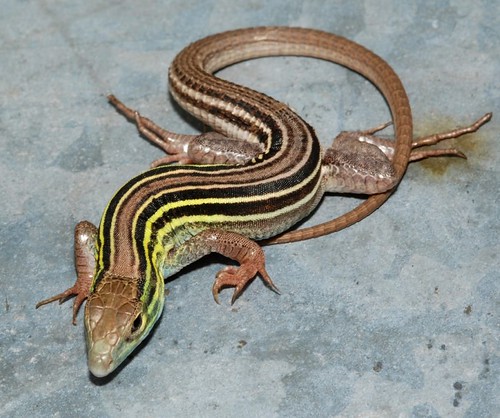
I recently found myself in central Kansas with a couple hours to spare, so I drove out to Maxwell Wildlife Refuge in McPherson County. This place has been a favorite of mine since childhood. I remember catching my first Hog-nosed snakes and 6 lined Racerunners in the Dakota Sandstone hills that dominate the landscape there.

But this visit was in the dead of winter, some 50 years after my childhood adventures. Some things have not changed at all. The herd of 50 elk that was introduced to the area in 1951 remains, hanging out in the bottomland timber on this chilly day.
The herd of American Bison numbers between 200 and 240 and is very approachable in between cattle guards on the 2000 acres of prairie.
Waterfowl squeezed into the remaining open water on McPherson County Fishing Lake within the refuge grounds. Highlights were Cackling Geese, Greater White-fronted Geese, Ring-necked Ducks and Common Goldeneye.
But today my target species was a particular raptor. Not the ubiquitous Red tails and harriers, but something a bit more swift and elusive. Somewhat of a nemesis bird to me through the years, I figured that my odds were good in the vast mid grass prairie on this winter day in central Kansas.

After completing my run through the refuge, I took a little used road one mile west of the public land. The red hues of the winter prairie glowed, even in the overcast, late afternoon light. It was there that I saw my prize lift off of the fence post and swing back beside me. Dark "wingpits", stealthy low altitude flight..... The falcon turned upward for a moment, and I saw it approaching a high altitude falcon before veering off to the west. I quickly backed the car up 1/4 mile to where I saw the bird dip into the valley, and there I relocated the beautiful adult Prairie Falcon on the fencepost.
All in all, I enjoyed two wonderful hours of wildlife watching in a place that can take you back in time 50 years, or even a 1000 years, on a Kansas prairie.

Saturday, January 2, 2010

Prodigy Seen Through Rufous Colored Bins

One of the primary missions of the Greater Ozarks Audubon Society is to reach out to discover all those people in the general population who have more than a passing interest in birds, and then to provide opportunities to foster their avian interest. This is particularly challenging when the person with the birding interest is still living in his/her parents' nest. But, discovering and investing in these young people is the most rewarding of all of our Greater Ozarks Audubon ventures, and it can pay big dividends in education and conservation as the years pass and these young people become adults, expanding their geographic ranges to reach into troubled ecosystems and pursue ecological solutions around the globe.
David Ringer and N8 Swick
During the holiday season, I had the privilege of birding with two of the finest that GOAS has nurtured, David Ringer and Nathan Swick. Even though we only joined for a brief moment in the living room of the gracious host's home pursuing a winged winter resident in Ozark, it was delightful to overhear the conversation and bask in the warmth of the bird friendly environs. How fitting that the accidental lingering of a tiny Rufous Hummingbird should provide the impetus for our paths to cross once again! It was another milepost forged by years of local relationships centered around small winged jewels of adaptation.
photo taken by Marvin DeJong
David Ringer, of Search and Serendipity and Nathan Swick, of The Drinking Bird were both GOAS prodigies as teen birders. They honed their identification skills in the field and their communication skills on the Internet to adapt to a changing technological climate and carve out unique niches in the blogosphere. Their blogs are both informative, innovative, and dedicated to blazing a trail into the frontiers of birding, conservation, and ecotourism.
Be sure to follow their blogs in 2010. They both will be chalk full of birding adventures, ecological insight, and just plain fun!
Although they were once our young, inquisitive kids in the club, as adults they have exceeded our expectations and soared to new heights, both becoming conservation leaders in a world starving for their intelligence, creativity, and new ideas for sustainable living on Earth. The birds, the birders, and the "village" will be stronger for what they have to offer. We at GOAS are simply proud to watch them dip and soar on the warm winds of change.

Friday, December 4, 2009

Visitors from the North Country

After returning to the Ozarks in early November, I was eager to return to old stomping grounds. November ended up being one of the warmest ever recorded in Missouri, so it was pleasant to spend as much time as possible out in the field. Even though the temperature rose into the 60's on November 22, a northern buddy returned to its late fall stopover for the second year in a row. The Lockwood Northern Shrike returned to the exact brush pile and surrounding fields as last year, eager to pose for my birding friend Marvin DeJong's camera.
It was only two years ago that I saw my life Northern Shrike at Fellows Lake, but I've managed to see the species for the past 3 years now. Does this represent a range expansion, or just a short term shift in migration pattern? Seems like most of the range expansion going on around here is toward the north. But, only time will tell with this northern version of shrike. Interestingly, the Northern Shrike that inhabited Whetstone Conservation Area in Fulton County, Missouri, last winter has arrived to occupy the exact same location this year, too.
On another note, how large is a loon's esophagus? Can it swallow a White Bass this size? Marvin DeJong caught this Common Loon with its successful catch on Stockton Reservoir last week. What do you think....... was it a snack for the loon, or did it escape back into the waters of Stockton?

GOAS Field Trip is off to Lockwood and Stockton again in the morning. Wonder what delights await us? Come back to find out!

Wednesday, December 2, 2009

Returning on Rufous wings

After a 4 month + hiatus from blogging, I have decided to ease back into the writing groove. I suppose it's safe to say that the blogging groove became a rut for a while, and the simple act of chronicling my outdoor adventures took a back seat to mostly mindless internets activity on Facebook!
The thing I missed most about my blog are the archives. If I wondered about an interesting species or equally interesting sighting date, all I had to do was search the good ole' blog to have an answer appear at my fingertips. I can still do that, but, in taking a break from blogging, I have lost a considerable block of personal birding history.
That being said, I just received a call of a newly reported Selasphorus hummingbird in Ozark. I hope to get over to see it today. I can't help put remember back in 1995 when an Anna's Hummingbird appeared at a feed in the middle of the town of Ozark. As far as I know, it was the last time an Anna's has graced our state. But, it's 10:55 am, here I go!
Success at 11:15! Back home at 11:20! 6 blocks away! A breeding plumage male Rufous! My photos are horrible, but I've sent my friend to take some real photos! In the meantime, here's my best, for what it is worth.

Well, I was going to mention my latest Northern Shrike from November 22. It appears that the same individual seen last November has returned to the exact same spot near Lockwood, MO, this year.

And I intended to feature some of my friend Marvin's loon photos, too. But, I'll save the shrike and loon shots for another day!

Friday, August 14, 2009

Reporting from North Carolina

Blogging has taken a back seat to almost everything in my life these days. Now that I've temporarily relocated to North Carolina for the next 10 weeks, it has become even easier to ignore this blog, as The Drinking Bird surely will cover all of our trips to the field. It's great to be out here spending time with Nate, Danielle, and Noah though, and I only occasionally mention to Nathan that my life Red Cockaded Woodpecker that is out there for the ticking!

I did receive great news that our GLADE TogetherGreen grant was approved for 2010! Today I discovered this link to YouTube from the TogetherGreen website.

TogetherGreen and the Greater Ozarks Audubon Society present GLADE!

I have begun my adventure in Science Teaching at Orange Charter School in Hillsborough, North Carolina. I'll be working with 6th, 7th, and 8th graders beginning on August 20, but am currently putting in a week of preparation for classes to begin. So far, it's going well. More on that in a later post, no doubt.

Thursday, July 2, 2009

Green Leadership Academy: Of Partnerships and Passions

I mentioned in a previous post that Lisa Berger, Audubon activist and visionary, gave birth to the idea of the Green Leadership Academy for Diverse Ecosystems (GLADE). Interested in how GLADE emerged from the ethereal, I asked her to write about its origins. So, in this final post in a four part series on the Green Leadership Academy, the topic is roots and the words are Lisa's.

l. to r., Dr. Janice Greene, me, Terresa McPheeters, and Lisa Berger


GLADE Beginnings: Of Partnerships and Passions
by Lisa Berger

We have to travel ten years back to record the earliest seeds of GLADE. In fact, the story really began with the inception of the Missouri State University’s (MSU) Bull Shoals Field Station (BSFS). In 1999, Assistant Director of the new BSFS, Mike Dickerson contacted me, then president of Greater Ozarks Audubon Society (GOAS), to discuss a project. Would we like to partner with them to build a bird checklist for the new field station, he and Dr. Brian Greene (MSU Biology Department) asked at a meeting at Panera’s?

What could be better than engaging our chapter in citizen science, doing the things our members love? Birding! Old time birders remember field trips to the old Drury House, built in 1924 overlooking the majestic White River, now Bull Shoals Lake. Better still, I envisioned a multitude of opportunities with MSU.

During this same time frame, Audubon Missouri (AM), the State Office of the National Audubon Society (NAS) was opened and one of its primary objectives was to initiate the Important Bird Areas (IBA) program. Started by BirdLife International, the IBA program is an international project to identify the landscapes that are of critical importance to birds at the population level. The IBA program is administered by NAS in the U.S.

In 2003, I was asked by AM to chair the state IBA steering committee to shepherd the process of nominating IBA sites in Missouri. Our chapter rallied to the call and nominated several sites across southwest Missouri.

By 2004, the Drury-Mincy Conservation Area, in which the field station resides, had been identified as part of the newly designated White River Glades and Woodlands state IBA. It is one of just a handful of the 47 IBA sites across the state to be included in the IBA Implementation Plan; a strategic document prioritizing the sites where state and federal agencies will invest limited resources, and where there is adequate capacity provided by groups like GOAS to do projects.

The current BSFS Director, Dr. Janice Green (MSU Biology Department) and I met at Panera’s to discuss potential opportunities for MSU and GOAS. The field station’s capacity was growing. The Drury house was being renovated. A new well, solar power with generator back-up, and an alternative septic system were in the works.

Are there opportunities for expanding our partnership within the context of the new IBA status, I ask? What things are possible that benefit both MSU and our chapter? GOAS is implementing a giant river cane restoration project to improve habitat for Swainson’s Warbler and the whole suite of species that utilize cane in this IBA. Is there potential intersection between MSU and GOAS activities? What about graduate student studies based upon giant cane; studies of insects, birds, and monitoring responses to habitat modifications? What about bringing kids to the glade areas of the field station and IBA to learn about restoration; to actually participate in on-the-ground restoration?

And that is when the vision was born.

The planets began to align, one by one. The early MSU and GOAS partnerships, the AM state IBA implementation plan and conservation action plans, the GOAS strategic plan, all building the critical capacity of and between organizations, and with each step the framework necessary to support a GOAS project connecting kids with nature.

But we’d need money. In spring, 2008, NAS announced the TogetherGreen program, a project of NAS made possible by a generous $20,000,000 donation from Toyota. Janice Greene and I scrambled to submit a grant application. Who would serve as director? Greg Swick had just retired from teaching. He said yes, and we were awarded the grant. Our GLADE solar system was complete.

Fast forward to July 1, 2009: GLADE week is complete. The kids learned all about sustainability at the field station. The alternative septic system required using environmentally-friendly soap, less toilet paper, and less water. Power use during the hot days had to be balanced with the solar-powered system.

The GLADE team is also learning about sustainability. We’ve given birth to a new environmental education concept that we want to keep alive. And so we set along the path to bring new stars into our solar system. We need sustained funding to provide the gravitational force to keep GLADE on course. We also need volunteers and professionals to share their talents, and we need teachers to shepherd their most promising students toward GLADE. Most of all we want our GLADE grads to carry with them the skills acquired at camp, and to be inspired to be leaders, to make a difference, knowing their actions today will shape tomorrow.